Some of the links in this post are affiliate links. This means we may earn a small commission if you make a purchase through these links—at no extra cost to you. We only recommend products and tools that we genuinely believe will help you with your dog.
You’re standing on the sidewalk. Your bulldog is doing “the flop”—flat on the ground, refusing to budge. A trail of treats leading to your front door? Ignored. You tug gently on the leash. Nothing. Your bulldog looks at you like YOU’RE the unreasonable one.
Sound familiar?
If you’ve ever tried to train a bulldog, you know the struggle is real. These adorable, wrinkly bundles of stubbornness have a reputation for being… let’s call it “selectively obedient.”
But here’s the good news: Bulldogs CAN be trained. It just takes a different approach than other breeds.
In this guide, you’ll learn:
- Why bulldogs are so stubborn (spoiler: it’s in their DNA)
- 10 breed-specific strategies that actually work for bulldogs
- Troubleshooting tips for common problems (the floor flop, refusing to walk, selective hearing)
- Real success stories from bulldog owners who’ve been exactly where you are
Most training advice out there is generic—it works for Labs and Golden Retrievers but falls flat with bulldogs. This guide is different. Every strategy is tailored specifically for the bulldog personality.
Let’s dive in.
Why Are Bulldogs So Stubborn? (Understanding the Breed)
Before we get into training strategies, let’s talk about why your bulldog acts like training is optional.
The History: Bred to Be Stubborn
Bulldogs weren’t always couch potatoes. Back in the 1500s to 1800s, they were bred for bull-baiting—a “sport” where dogs attacked bulls for entertainment.
Think about what that job required:
- Extreme tenacity (never give up, no matter what)
- High pain tolerance (getting kicked by a bull? No big deal)
- Independent thinking (no time to wait for human commands)
- Courage bordering on recklessness
Bulldogs had to latch onto a bull’s nose and hold on no matter how much the bull tried to shake them off. If a dog gave up easily, they didn’t survive.
That’s your bulldog’s genetic blueprint. The bull-baiting is long gone, but the stubbornness remains.
Modern breeding reduced the aggression, but kept the stubborn, I’ll-do-it-my-way attitude. When your bulldog ignores your command, they’re not being spiteful. They’re being exactly what centuries of breeding designed them to be.
Bulldog Temperament Traits (The Good, The Bad, The Stubborn)
Let’s break down the bulldog personality:
1. Food-Motivated… Until They’re Not
Bulldogs love food. Until they decide they don’t. One day, they’ll do backflips for a piece of cheese. The next day? They’ll stare at the treat like it personally offended them.
Why? Bulldogs are selective about when they’ll work for food. If they’re not in the mood, no amount of treats will help.
2. Comfort-Seeking Champions
If the ground is cool, your bulldog is staying there. If the couch looks comfy, they’re not moving. Bulldogs are all about comfort, and they’ll resist anything that disrupts it.
3. Low Energy (And Proud of It)
Bulldogs aren’t lazy. They’re just energy-efficient. Why walk when you can be carried? Why train when you can nap?
4. Independent Thinkers
Unlike Labs who live to please you, bulldogs think: “What’s in it for me?” They need a reason to obey.
5. Emotionally Sensitive
Here’s the surprise: Bulldogs are highly attuned to your emotions. If you’re frustrated, they sense it—and they’ll shut down or get more stubborn.
Health Factors Affecting Trainability
This is huge. Some “stubbornness” is actually health-related.
Brachycephalic Syndrome (Flat Face = Breathing Problems)
Bulldogs have shortened airways. This means:
- They overheat easily (can’t train in heat or humidity)
- They tire quickly (short training sessions are a must)
- Overexertion can be dangerous (they can collapse)
If your bulldog refuses to walk in summer, it’s not stubbornness—it’s survival.
Joint Issues
Bulldogs are prone to hip dysplasia and arthritis. If your bulldog won’t sit or lie down, it might hurt to do so.
Obesity
Overweight bulldogs have less energy and motivation. A healthy weight makes training much easier.
Bottom line: Always rule out health issues before assuming it’s just stubbornness.
The 10 Proven Strategies to Train a Stubborn Bulldog
Okay, let’s get into the strategies that actually work.
Strategy #1: Master the Motivation Hierarchy (When Treats Fail)
Most training advice says: “Use treats.” But what happens when your bulldog looks at a treat and goes, “Meh”?
You need a motivation hierarchy.
Level 1: High-Value Food (Works 70% of the Time)
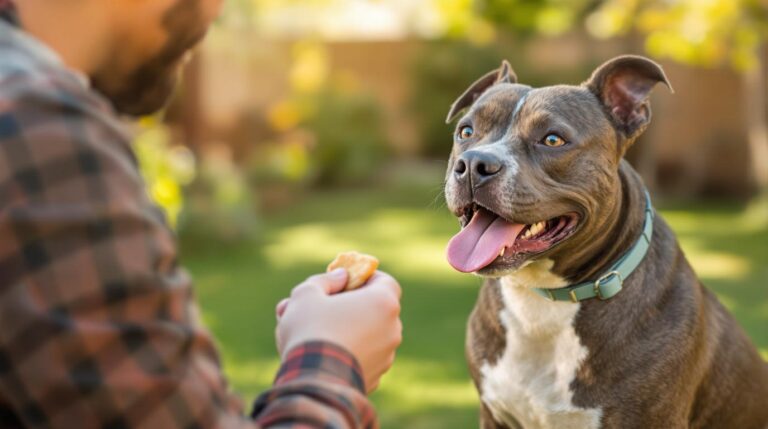
Not all treats are equal. Your bulldog needs the GOOD stuff:
- Freeze-dried liver
- Small pieces of cheese
- Hot dog slices
- Fresh chicken or turkey
- Peanut butter (small amounts)
Pro tip: Keep treats soft and smelly. Bulldogs have less sensitive noses than other breeds, so the stinkier, the better.
Level 2: Play & Toys (For Non-Food-Motivated Bulldogs)
Some bulldogs go nuts for toys:
- Squeaky toys
- Rope toys for tug-of-war
- Tennis balls (some bulldogs love fetch)
Real example: “My bulldog Tank ignores treats outside. But show him his squeaky ball? He’s suddenly a model student.”
Level 3: Comfort & Social Rewards (The Secret Weapon)
This is what most people miss. Bulldogs are comfort-seekers. Use that:
- Belly rubs
- Getting to go on the couch
- Snuggle time
- Verbal praise in a happy voice
Try this: After your bulldog sits on command, reward with a 30-second belly rub. Many bulldogs find this MORE motivating than food.
Level 4: Environmental Rewards
This is sneaky but effective:
- Access to air conditioning (if training outside in warmth)
- Getting to go inside
- Access to their favorite spot (couch, bed, sunny window)
Real example: “My bulldog Rosie hates summer walks. But if I promise her AC time afterward? She’ll walk a whole block without the floor flop.”
The key: Figure out what YOUR bulldog values most and use THAT as the reward.
Strategy #2: Keep Sessions SUPER Short (5 Minutes Max)
Here’s where bulldog training differs from other breeds: Short sessions are non-negotiable.
Why Short Sessions Work:
1. Bulldogs Have Short Attention Spans
Most bulldogs can focus for 5-10 minutes, tops. After that, they’re mentally checked out.
2. Bulldogs Overheat Easily
Long training sessions = overheating = dangerous.
3. Bulldogs Get Bored
Repetition bores them. Short, varied sessions keep them engaged.
The Protocol:
✅ 5 minutes per session, 3 times per day = 15 minutes total
✅ Train in a climate-controlled environment (AC in summer, warmth in winter)
✅ End BEFORE they lose interest
Signs Your Bulldog Is Done:
- Lying down
- Panting heavily
- Looking away or ignoring you
- The dreaded “floor flop”
Action step: Set a timer on your phone. When it goes off, END the session—even if it’s going great. This keeps them wanting more.
Strategy #3: Solve the “Floor Flop” (The Classic Bulldog Move)
Ah, the floor flop. The move that makes every bulldog owner question their life choices.
What Is the Floor Flop?
Your bulldog literally goes boneless and flattens themselves to the ground. They refuse to move, no matter what. It usually happens:
- Mid-walk
- When you want them to come inside
- Anytime they’ve decided they’re done
Why It Happens:
1. Too Hot
Bulldogs overheat in temperatures above 75°F (24°C). If the ground is cool, they’re lying on it to regulate their body temperature.
This is serious. Bulldogs can have heatstroke quickly.
2. Too Tired
Bulldogs have low stamina. A 20-minute walk might be their limit.
3. Not Motivated
They don’t see the point in moving. Simple as that.
4. Pure Stubbornness
Sometimes, they just don’t wanna.
Solutions:
If It’s Heat-Related:
🚨 This is an emergency.
- Bring water; wet their paws, belly, and ears
- Move to shade immediately
- Stop the walk and go home
- Never drag or force them—you could cause heatstroke
Prevention: Only walk during cool times (early morning, late evening). Never walk in heat or humidity.
If It’s Stubbornness:
DON’T pull or drag. This makes it worse. Bulldogs will dig in harder.
Instead, try these:
Option 1: Walk Away
Seriously. Walk away calmly (but stay within sight). Many bulldogs will follow when you stop trying to force them.
Option 2: Use a Higher-Level Reward
If treats aren’t cutting it, try Level 2-3 motivation (toys, the promise of AC, belly rubs when you get home).
Option 3: Make the Destination Worth It
“If you come inside, you get to lay in front of the fan.”
Option 4: The Pickup
Bulldogs only weigh 40-50 lbs. If you’re able, pick them up and carry them. Some bulldogs are just… pick-up-able.
Pro tip: On smooth floors (tile, wood), some bulldogs are “slidable.” You can gently slide them a short distance. (Please do this gently and only if they’re not distressed!)
Strategy #4: Train Indoors First, Then Gradually Add Distractions
Bulldogs get overwhelmed easily. Too many distractions = training fails.
The 3-Stage Training Protocol:
Stage 1: Indoor, No Distractions (Week 1-2)
- Quiet room, door closed
- No TV, no other people, no other pets
- Practice one command (sit, stay, come, or down)
- 5-minute sessions, 3x/day
- Goal: 90% success rate before moving to Stage 2
Stage 2: Indoor with Distractions (Week 3)
- TV on, other people in the house
- Practice the same command
- Slightly harder because there are now distractions
- Goal: 80% success rate before moving outdoors
Stage 3: Outdoor in Controlled Environment (Week 4+)
- Start in your quiet backyard
- Then a quiet street
- Then busier areas (only in cool weather!)
- Goal: Bulldog obeys in real-world situations
Why this works: You’re building success step by step. Bulldogs need to MASTER a behavior in a calm environment before they can do it with distractions.
Strategy #5: Use Consistency Like Your Life Depends On It
Bulldogs are independent thinkers. They’ll exploit any inconsistency.
What Consistency Means:
✅ Same command words (Don’t say “sit” one day and “sit down” the next)
✅ Same hand signals
✅ Same tone of voice
✅ Same training time each day (if possible)
✅ Same rules for everyone (If “no begging” is a rule, EVERYONE enforces it)
Why It Matters for Bulldogs:
1. They’re Independent Thinkers
If the rules change, they’ll decide the rules don’t matter.
2. They Have Short-Term Memory Issues
Repetition and consistency = learning.
3. They’re Sensitive to Routine
Changes in routine cause anxiety, which increases stubbornness.
Real example: “My family let our bulldog Daisy beg at dinner ‘just once’ because she looked so cute. Within a week, she was a professional beggar. It took 3 weeks of 100% consistency (everyone ignoring her) to undo it.”
The hard truth: If you’re inconsistent, you’re training your bulldog that commands are optional.
Strategy #6: Never Train When You’re Frustrated (They Can Tell)
Bulldogs are emotionally intuitive. They sense your frustration instantly.
What Happens When You Train Frustrated:
- Your bulldog gets more stubborn (digging in as a defensive response)
- They shut down (stop trying altogether)
- They may have “temper tantrums” (barking, whining)
- Training becomes a negative experience for both of you
The Rule:
If you’re annoyed, frustrated, or angry → STOP THE SESSION.
What to Do Instead:
- Take 5 deep breaths
- Step away for 5 minutes
- Come back calm, or skip that training session
- One missed session won’t hurt
Tone Matters:
- Calm, upbeat voice = compliance
- Frustrated, harsh voice = resistance
Remember: Your bulldog isn’t trying to make you mad. They’re just being a bulldog.
Strategy #7: Master Leash Training for Bulldogs (They Pull Differently)
Leash training bulldogs is… special.
Why Bulldogs Are Hard to Leash Train:
1. Low Center of Gravity
Bulldogs are built like tanks. When they pull, they have MORE leverage than taller dogs.
2. Brachycephalic Anatomy
If they pull on a collar, they choke themselves. This is dangerous.
3. Stubbornness
They go where they want, when they want.
The Solution:
Step 1: Use a Harness, NEVER a Collar
- Front-clip harness (discourages pulling by turning them toward you)
- Padded for comfort
- Doesn’t restrict breathing
Why not a collar? Bulldogs have delicate tracheas. Pulling on a collar can cause breathing problems or collapse.
Step 2: The “Stop and Wait” Method
This takes patience, but it works:
- Walk with your bulldog on a loose leash
- The moment they pull → you stop walking
- Stand still (don’t pull back)
- Wait until the leash loosens
- Say “yes!” and continue walking
- Repeat 100 times per walk if needed
Why it works: Your bulldog learns that pulling = no forward movement. Not pulling = getting where they want to go.
Step 3: Make Walking Worthwhile
Bulldogs need a REASON to walk:
- Let them sniff (this is their “reading the news”)
- Bring water (they get thirsty quickly)
- Keep walks short (10-15 minutes max)
- Only walk in cool weather (below 75°F / 24°C)
Pro tip: Some bulldogs will never be “perfect” leash walkers. That’s okay. Aim for “not pulling dangerously” rather than perfection.
Strategy #8: Teach Commands in “Bulldog Language” (Body Language + Eye Contact)
Bulldogs communicate differently than other breeds.
How Bulldogs “Talk”:
- Limited facial expressions (flat face = hard to read)
- Heavy reliance on body language
- Snorting, grunting, wheezing = their version of vocalizations
Training Tips:
1. Use Eye Contact
Get their attention first: “Look at me” or “Watch me”
Bulldogs won’t obey if they’re not looking at you. If they look away, their focus is elsewhere.
2. Use Clear Hand Signals
Hand signals are MORE effective than words alone:
- “Sit” + hand moving up from their nose
- “Come” + patting your leg + crouching down
- “Stay” + palm out like a stop sign
Why? Bulldogs have less sensitive hearing than some breeds. Visual cues are clearer.
3. Exaggerate Your Movements
Subtle gestures don’t work with bulldogs. Make your signals BIG and obvious.
Strategy #9: Address Health Before Assuming It’s Stubbornness
This is crucial. Some “stubbornness” is actually pain or illness.
Medical Issues That Look Like Stubbornness:
Breathing Problems
If your bulldog:
- Pants constantly, even when cool
- Refuses to walk
- Collapses or faints
→ Vet visit ASAP. They may need surgery (soft palate resection, nostril widening).
Joint Pain (Arthritis, Hip Dysplasia)
If your bulldog:
- Hesitates before sitting or lying down
- Limps or stiffens after rest
- Refuses to jump or climb stairs
→ This is pain, not defiance. They may need pain medication or joint supplements.
Obesity
Overweight bulldogs have:
- Less energy
- Less motivation
- More joint pain
Target weight:
- Males: 45-55 lbs
- Females: 40-50 lbs
Weight loss = dramatically improved trainability.
Hearing Loss (Common in Senior Bulldogs)
If your older bulldog suddenly “ignores” commands, they might not hear you.
Solution: Switch to visual hand signals only.
Action Step: If training suddenly stops working, or your bulldog seems off, see your vet.
Strategy #10: End Every Session on a Win (Even a Tiny One)
This is the golden rule.
Why It Matters:
Bulldogs have long memories for negative experiences. If a training session ends in failure:
- They’ll be less willing to train tomorrow
- They’ll associate training with frustration
- Stubbornness increases
How to Do It:
If the training session isn’t going well:
- Ask for an easy command they already know (like “sit”)
- Reward generously
- End the session there
Example:
You’re trying to teach “stay.” Your bulldog isn’t getting it. They keep breaking the stay after 2 seconds.
Instead of ending frustrated:
- Ask for “sit” (they know this)
- Big praise, treat, belly rub
- End session
Tomorrow, they’ll show up ready to try again because the last session ended on a good note.
Age-Specific Training Guidance
Training looks different depending on your bulldog’s age.
Training Bulldog Puppies (8 Weeks – 1 Year)
Advantages:
- More moldable (habits not set)
- Higher energy (relatively speaking)
- More eager to please
Challenges:
- Even shorter attention span
- Teething = chewing everything
- Potty training accidents
Focus Areas:
1. Socialization (8-16 Weeks: Critical Window)
Expose your puppy to:
- Different people (men, women, children)
- Other friendly dogs
- Different sounds (vacuum, doorbell)
- Different environments (pet store, park, car rides)
Why? Properly socialized puppies = less fearful adults = easier to train.
2. Bite Inhibition
Puppies bite. Teach them soft mouth early:
- When they bite too hard, say “Ouch!” and stop playing
- Reward gentle play
3. Potty Training
- Take outside every 2 hours (after eating, playing, waking up)
- Praise immediately when they go
- Never punish accidents (just clean up)
4. Basic Commands
Start with: Sit, Come
Keep it simple. Puppies are learning a LOT right now.
Training Adult Bulldogs (1-7 Years)
Advantages:
- Slightly better attention span
- Personality established (you know what you’re working with)
Challenges:
- Habits already formed
- Peak stubbornness years
- May have learned training is optional
Focus Areas:
- Breaking bad habits (begging, pulling, ignoring commands)
- Refreshing basic commands
- Leash manners
- Impulse control (leave it, drop it, stay)
Training Senior Bulldogs (7+ Years)
Advantages:
- Calmer temperament
- More bonded to owner
Challenges:
- Arthritis/joint pain
- Hearing or vision decline
- Lower energy
- Possible cognitive decline
Adjustments:
- Shorter sessions (3-5 minutes)
- Use visual signals (if hearing loss)
- Adapt commands to physical limits (slower sits if arthritis)
- Prioritize comfort over perfection
The truth: If your senior bulldog is physically struggling, it’s okay to stop pushing. Their comfort matters more than obedience at this stage.
Troubleshooting Common Stubborn Bulldog Problems
Let’s solve specific issues.
Problem #1: Refuses to Walk Outside
Possible Causes:
- Too hot
- Scared (traffic, other dogs)
- Just doesn’t want to
Solutions:
✅ Walk only in cool weather (morning/evening)
✅ Start with very short distances (to the end of the driveway)
✅ Reward every few steps
✅ Try a new location (drive them somewhere, walk from there)
✅ Consider a dog stroller (seriously—some bulldogs love them)
Problem #2: Selective Hearing (“I Know You Can Hear Me”)
Possible Causes:
- Not motivated enough
- Distracted
- Learned commands are optional
Solutions:
✅ Increase reward value (Level 2-3 motivation)
✅ Practice in less distracting environment
✅ Use a long lead for recall training
✅ Never give a command you can’t enforce
Problem #3: Treats Don’t Work Anymore
Solutions:
✅ Rotate treat types (prevent boredom)
✅ Try non-food rewards (toys, play, affection)
✅ Use treats only for training (not as free handouts)
✅ Check if they’re getting treats elsewhere (family members, neighbors)
Real Success Stories (You Can Do This Too)
Story #1: Rosie the Floor-Flopper
The Problem: Rosie flopped on every walk, often just 5 feet from the front door.
What Worked:
Her owner discovered Rosie would walk away from home but not toward it. So they:
- Drove her around the block
- Walked home from there
- Gradually shortened the drive
After 3 months: Rosie walked a full loop without flopping.
Lesson: Get creative. Bulldogs are weird. Work with their weird.
Story #2: Tank Who Ignored All Commands
The Problem: Tank knew commands but chose not to obey.
What Worked:
His owner realized treats weren’t motivating enough. They switched to toy rewards (Tank’s squeaky ball).
Result: Tank started responding immediately. After 2 weeks, they could phase back to occasional treats.
Lesson: Find THEIR motivation.
Story #3: Senior Mabel’s New Tricks
The Problem: 8-year-old Mabel never learned basic commands.
What Worked:
- 3-minute sessions (adjusted for age)
- High-value treats (freeze-dried liver)
- Adapted to arthritis (didn’t require fast movements)
After 6 weeks: Mabel knew sit, stay, and come.
Lesson: It’s never too late.
When to Seek Professional Help
Sometimes, you need backup. That’s okay.
See a Professional If:
- Your bulldog is aggressive (growling, snapping, biting)
- You’ve tried training for 4-6 weeks with zero improvement
- You suspect a medical issue
- You feel overwhelmed or unsafe
Where to Find Help:
- Certified Professional Dog Trainer (CPDT)
- Veterinary Behaviorist (DACVB)
- Your local bulldog breed club (ask for recommendations)
What to Expect:
- One-on-one assessment
- Customized training plan
- Possible medical evaluation
- 4-8 week commitment
Cost: $100-300 per session, or $500-1500 for packages
There’s no shame in getting help. Some bulldogs need professional intervention.
Conclusion: You’ve Got This
Let’s recap what you’ve learned:
✅ Bulldogs are stubborn by design (genetics, not your fault)
✅ Short sessions win (5 minutes, 3x/day)
✅ Find THEIR motivation (treats, toys, comfort, access)
✅ Health matters (pain, breathing, heat affect training)
✅ Consistency is everything (bulldogs need routine)
✅ End on wins (positive memories = willing learners)
✅ Get creative (bulldogs need bulldog-specific solutions)
Your Next Steps:
This Week:
- Choose ONE command to work on (sit, stay, or come)
- Set a timer for 5-minute sessions, 3x/day
- Test different rewards to find what motivates YOUR bulldog
- Track progress (even small wins count!)
Final Thought
Training a stubborn bulldog isn’t about breaking their will. It’s about understanding their stubborn, lovable, occasionally infuriating personality and working WITH it.
Yes, it takes patience.
Yes, it takes creativity.
Yes, there will be days where you question everything.
But when your bulldog finally masters that command—on their own terms, of course—it’s one of the most rewarding feelings in the world.
Your bulldog isn’t untrainable. They just need you to speak their language.
You’ve got this.